
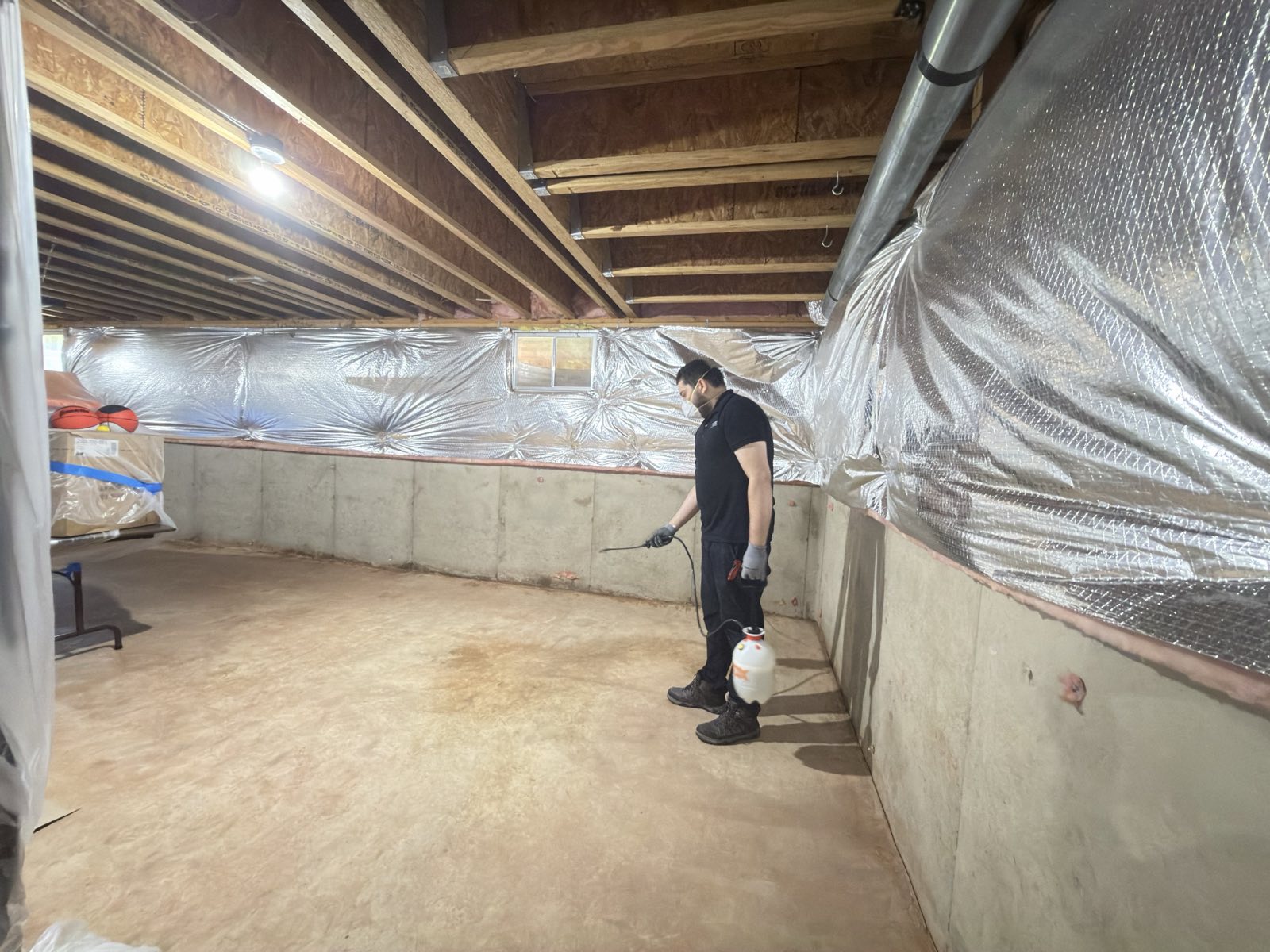
Water Damage Restoration in Long Island City
Long Island City has added more new residential towers in the past fifteen years than almost anywhere in the country, and every one of those towers stacks hundreds of kitchens, bathrooms, and laundry closets on shared risers. Restoration Doctor of NYC provides water damage restoration in Long Island City designed for that vertical reality: when a supply line fails on the 30th floor, the loss is not one apartment — it is a column of them, and the response has to be organized that way from the first hour.
From the glass high-rises around Court Square and Queens Plaza to the waterfront towers of Hunters Point and the surviving older stock in Dutch Kills and Blissville, we handle the full range of LIC losses: burst supply lines, appliance failures, sprinkler discharges, amenity-floor and pool-level leaks, and storm water in ground-level and cellar spaces. Crews dispatch 24/7 and work to IICRC S500 standards with unit-by-unit moisture documentation.
High-rise work also means working with buildings, not just apartments. We coordinate with property management on certificates of insurance, freight elevator reservations, and access to affected units down the stack — and we keep resident managers and boards informed with documentation they can actually use.
The buildings of Long Island City — and how they fail
The defining LIC building is the post-2005 residential tower: reinforced concrete structure, floor-to-ceiling glass curtain wall, central corridors, and unit layouts repeated identically floor after floor. That repetition is the key fact for water damage — plumbing risers, waste stacks, and laundry connections align vertically, so a failure at any height wets the same rooms in every unit below it. Assemblies are drywall over metal studs, engineered flooring over concrete slabs, and insulated curtain-wall spandrels, all of which conceal moisture behind intact-looking surfaces.
These buildings also concentrate risk in places older stock does not have: amenity floors with pools, spas, gyms, and landscaped terraces sitting directly above occupied units; mechanical floors mid-tower; and package rooms, lobbies, and parking below grade. A pool-deck membrane failure or a rooftop terrace drain clog produces losses that behave like roof leaks — but with occupied apartments immediately below.
Around the towers, older Long Island City persists: attached brick rowhouses and small walk-ups in Dutch Kills and the Hunters Point side streets, converted industrial buildings, and one-story commercial stock. These buildings fail in traditional ways — aging branch lines, roof leaks, cellar backups during heavy rain — and much of low-lying LIC near Newtown Creek and the East River carries mapped flood-zone exposure at grade.
How water losses unfold in Long Island City
Stacked Risers: One Failure, Many Units
In a repetitive-floor-plate tower, the first question after any water release is how far down it went. Water from a failed supply line or washer connection finds slab penetrations, riser chases, and conduit sleeves and drops floor by floor, often surfacing in the same corner of each unit below. It is common for the resident who reports the leak to be several floors below the actual source.
Our high-rise protocol starts at the reported unit and works both directions: up to find the source with management's help, and down until two consecutive floors meter dry. Every affected unit gets its own moisture map and its own documentation, because every owner or tenant will deal with their own insurer and their own repairs. HO-6 unit policies and the building's master policy divide responsibility differently in every building, and policies vary — clean per-unit records keep that process sane.
Speed matters double in these buildings because modern assemblies hide water. Drywall, insulation, and floating floors can hold moisture invisibly for weeks; the difference between a two-day dry-out and a mold remediation is usually the first 24 hours.
Amenity Floors, Terraces, and Building Systems
LIC towers put water in unusual places: pools and spas on podium roofs, planted terraces over occupied units, pet spas, and laundry rooms on upper floors. Membrane failures, clogged terrace drains, and pool-system leaks produce slow, recurring losses that stain ceilings below intermittently and are frequently misdiagnosed as plumbing failures.
We approach these as forensic problems: moisture mapping the affected ceilings, correlating with weather and amenity usage, and working with building management and their waterproofing or pool vendors to isolate the source. Drying the apartment without solving the source guarantees a repeat loss, so our documentation flags the pattern honestly.
Below grade, LIC parking levels, storage cages, and mechanical rooms flood from both directions — storm water in from outside, and domestic water down from above. Storm and groundwater intrusion is handled as contaminated water under IICRC S500, with contents in storage cages documented item by item for their owners.
Working With LIC Property Management
Nothing moves in a Long Island City tower without management, and we are built for that. Certificates of insurance naming the condominium or landlord entity and the managing agent go out before the crew arrives; freight elevators get reserved; corridor protection goes down; and access to units in the affected stack is coordinated through the resident manager so mitigation is not stalled waiting on individual residents.
For rental buildings, we work with the landlord's management team on scope and access while keeping displaced tenants informed about timelines. For condos, each affected owner gets their own documentation package while the board receives the building-level picture. Who engages us for which portion is always the owner's, board's, or management's choice.
Typical LIC losses range from a low-four-figure single-unit dry-out to five-figure multi-floor stack losses, depending on how many units were affected and how long the water ran before shutoff. We report the metered extent before scoping, so nobody pays for drying that the readings do not justify.
Long Island City neighborhoods we serve
Real communities — and the water losses we most often see in each.
The densest tower cluster in Queens — repetitive floor plates where riser losses run vertically through a dozen or more units.
Newer high-rise rentals and condos around the bridge approaches, with below-grade parking and retail exposed to storm water.
Waterfront towers facing the East River with flood-zone exposure at grade and amenity decks over occupied units.
Older attached brick rowhouses and small walk-ups north of Queens Plaza, where aging branch lines and cellar backups drive most losses.
Mixed mid-rises and converted buildings with ground-floor restaurants and retail sitting directly below residential plumbing.
Low-lying industrial-residential fringe where heavy rain and creek-side flood exposure hit cellars and ground floors first.
Full restoration services in Long Island City
One operation covers every category — from emergency mitigation to full reconstruction.
Water Damage Restoration
Restoration Doctor of NYC provides emergency water extraction, moisture mapping, and structural drying for apartments, co-ops, condos, brownstones, and commercial spaces throughout the five boroughs, working within building rules, insurance documentation requirements, and the realities of vertical living.
Sewage Cleanup
Restoration Doctor of NYC performs emergency sewage extraction, contaminated-material removal, cleaning, and disinfection for sewer backups and drain failures in brownstone cellars, apartment buildings, and commercial spaces throughout New York City.
Mold Remediation
Restoration Doctor of NYC provides containment-based mold remediation for apartments, brownstones, and commercial spaces across the five boroughs, performed in a manner consistent with the IICRC S520 standard and with awareness of New York State and City mold regulations.
Fire Damage Restoration
Restoration Doctor of NYC handles the full arc of fire recovery in New York City properties — emergency board-up and securing, smoke and soot cleaning, odor treatment, water mitigation from firefighting, and structural rebuild — with the building coordination that multi-unit fires demand.
Contents Restoration
Restoration Doctor of NYC provides full contents services for New York City losses: detailed photo inventory, professional pack-out through the realities of NYC building access, specialized cleaning and deodorization, climate-controlled storage outside Manhattan, and coordinated return after rebuild.
Reconstruction
Restoration Doctor of NYC rebuilds water-, fire-, and mold-damaged spaces across the five boroughs, managing the approvals, access logistics, and trade coordination that New York buildings require, and restoring everything from patched drywall to full gut renovations of loss-affected units.
Verify us before you call
Our customer feedback lives on the network's verified reviews hub and on our New York City Google Business Profile — source-linked aggregates, never numbers typed onto a marketing page. Check both, then call.
Frequently asked
Active water, mold, fire, or sewage event?
Connect directly with the Restoration Doctor team for your region. Crews are on standby 24/7 with documented response protocols.
Financing available through Stripe, subject to lender approval.