
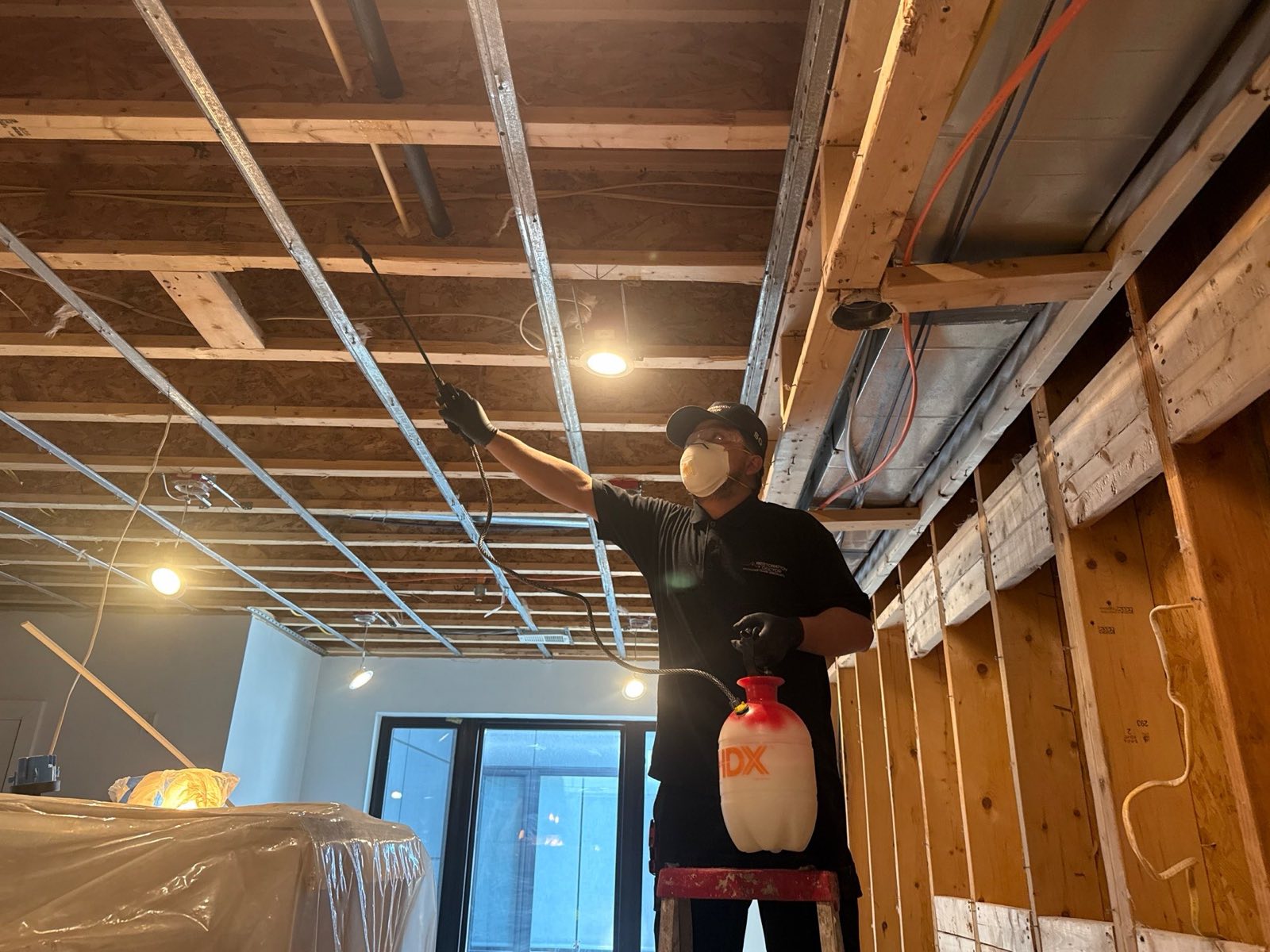
Water Damage Restoration in Queens
Queens is where New York's water problems come up from the street. When a summer cloudburst drops two inches of rain in an hour, the borough's storm drains surcharge and water pours into below-grade apartments in Flushing, Woodside, and Jamaica faster than anyone can react. Restoration Doctor of NYC provides water damage restoration Queens homeowners, landlords, and building managers call first — for street-flooding events, burst pipes, sewage backups, appliance failures, and everything in between. We answer 24/7 at (646) 789-6264.
No borough has a wider range of housing. Attached and semi-attached brick rows in Ridgewood and Middle Village, detached frame colonials in Bayside and Queens Village, six-story pre-war walk-ups in Astoria and Jackson Heights, garden apartment complexes in Kew Gardens Hills, and glass high-rises along the Long Island City waterfront. Each type floods differently, dries differently, and involves different decision-makers — an owner-occupant, a co-op board, a management office, or a landlord three time zones away.
Our crews dry to IICRC S500 standards, remediate mold to S520, and document every step — moisture maps, photos, and daily logs — so whatever policies are involved, the paperwork is never the reason a claim stalls.
The buildings of Queens — and how they fail
The defining Queens dwelling is the attached or semi-attached house with a below-grade unit: a brick or frame two- or three-family where the basement or ground floor is finished living space, often a rental. These below-grade apartments sit at exactly the elevation where cloudburst runoff, sewer surcharge, and foundation seepage converge. When the remnants of a tropical system stall over the borough, entire blocks of these units take on water in the same hour — and because they are homes, not storage, the losses involve drywall, flooring, furniture, and displaced tenants.
Pre-war Queens is concentrated in Astoria, Sunnyside, Jackson Heights, and Forest Hills: solid brick walk-ups and famous garden co-ops with plaster walls, steam heat, and risers that have crossed the century mark. These buildings suffer the classic vertical losses — a radiator valve or supply line fails on an upper floor and the water works down through three apartments of plaster and hardwood. Co-op ownership adds boards, house rules, and alteration agreements to the recovery process.
Then there is Long Island City, which has added more new high-rise units than almost anywhere in the country. Those towers behave like Manhattan buildings: stacked wet walls, fan-coil condensate lines, sprinkler systems, amenity-floor pools and roof decks, and building management that requires certificates of insurance and freight elevator bookings before a single air mover comes through the lobby. We run LIC losses with the same COI-and-logistics discipline we use across the river.
How water losses unfold in Queens
Cloudbursts and Below-Grade Apartments
Queens learned the hard way that intense short-duration rain is its most dangerous flood scenario. Street drainage backs up, water sheets down driveways and through window wells, and below-grade units can fill by feet, not inches. Water that has crossed a street and entered through a sewer or window well is treated as contaminated, which drives the scope: porous materials that soaked in it typically come out, and the space is cleaned, disinfected, and dried with verification readings before anything is rebuilt.
For two- and three-family owners, we also document conditions thoroughly — entry points, water lines on the walls, affected tenant property — because these losses often involve both an owner's policy and a tenant's renters policy, and clean documentation keeps everyone's claim moving. Coverage for surface-water flooding varies significantly by policy, so we record facts and let each policy respond as written.
Winter Failures in Pre-War Walk-Ups
Astoria and Jackson Heights winters produce the borough's other signature loss: frozen or failed heating risers, cracked radiator valves, and burst supply lines in exterior walls. In a six-story walk-up, an overnight failure on the fifth floor means four ceilings below it are wet by morning. Steam and hot-water releases also cook the plaster they touch, which changes what can be salvaged.
We handle these as building-system events, not single-apartment jobs: confirm shut-off with the super, extract floor by floor, open only what the meters say must be opened, and keep per-unit drying logs. In co-ops like the Jackson Heights garden buildings, we coordinate with the managing agent so board notification and access to multiple units happens on day one, not day four.
Sewage Backups, Laterals, and the Long Tail of Moisture
Aging clay sewer laterals under Queens front yards crack, root in, and back up — usually into the lowest fixture in the house. A sewage backup is a Category 3 loss regardless of how small it looks: the affected area needs containment, removal of contaminated porous materials, disinfection, and verified drying. Shortcutting that process is how basements end up with odor and mold problems months later.
The long tail matters just as much after any Queens flood. Masonry foundations and slab edges hold moisture long after surfaces feel dry, and finished basements rebuilt too early trap it behind new drywall. We release a space for rebuild only when moisture readings hit dry-standard targets, and we put those numbers in writing.
Queens neighborhoods we serve
Real communities — and the water losses we most often see in each.
Pre-war brick walk-ups where century-old risers and radiator valves drive winter multi-floor losses.
New waterfront towers with stacked wet walls — COI, freight elevator, and per-unit documentation on every job.
Dense mix of below-grade apartments and newer condos in one of the borough's worst cloudburst-flooding zones.
Historic garden co-ops where board coordination and plaster salvage shape the recovery plan.
Pre-war co-op buildings and Tudor rows with slate roofs whose failures show up as top-floor ceiling damage.
Attached brick rows with shared walls and finished basements vulnerable to sewer surcharge.
Frame two- and three-families with below-grade rentals in low-lying, flood-prone drainage basins.
Detached single-families with true basements — sump failures and lateral backups are the usual culprits.
Full restoration services in Queens
One operation covers every category — from emergency mitigation to full reconstruction.
Water Damage Restoration
Restoration Doctor of NYC provides emergency water extraction, moisture mapping, and structural drying for apartments, co-ops, condos, brownstones, and commercial spaces throughout the five boroughs, working within building rules, insurance documentation requirements, and the realities of vertical living.
Sewage Cleanup
Restoration Doctor of NYC performs emergency sewage extraction, contaminated-material removal, cleaning, and disinfection for sewer backups and drain failures in brownstone cellars, apartment buildings, and commercial spaces throughout New York City.
Mold Remediation
Restoration Doctor of NYC provides containment-based mold remediation for apartments, brownstones, and commercial spaces across the five boroughs, performed in a manner consistent with the IICRC S520 standard and with awareness of New York State and City mold regulations.
Fire Damage Restoration
Restoration Doctor of NYC handles the full arc of fire recovery in New York City properties — emergency board-up and securing, smoke and soot cleaning, odor treatment, water mitigation from firefighting, and structural rebuild — with the building coordination that multi-unit fires demand.
Contents Restoration
Restoration Doctor of NYC provides full contents services for New York City losses: detailed photo inventory, professional pack-out through the realities of NYC building access, specialized cleaning and deodorization, climate-controlled storage outside Manhattan, and coordinated return after rebuild.
Reconstruction
Restoration Doctor of NYC rebuilds water-, fire-, and mold-damaged spaces across the five boroughs, managing the approvals, access logistics, and trade coordination that New York buildings require, and restoring everything from patched drywall to full gut renovations of loss-affected units.
Verify us before you call
Our customer feedback lives on the network's verified reviews hub and on our New York City Google Business Profile — source-linked aggregates, never numbers typed onto a marketing page. Check both, then call.
Frequently asked
Active water, mold, fire, or sewage event?
Connect directly with the Restoration Doctor team for your region. Crews are on standby 24/7 with documented response protocols.
Financing available through Stripe, subject to lender approval.