
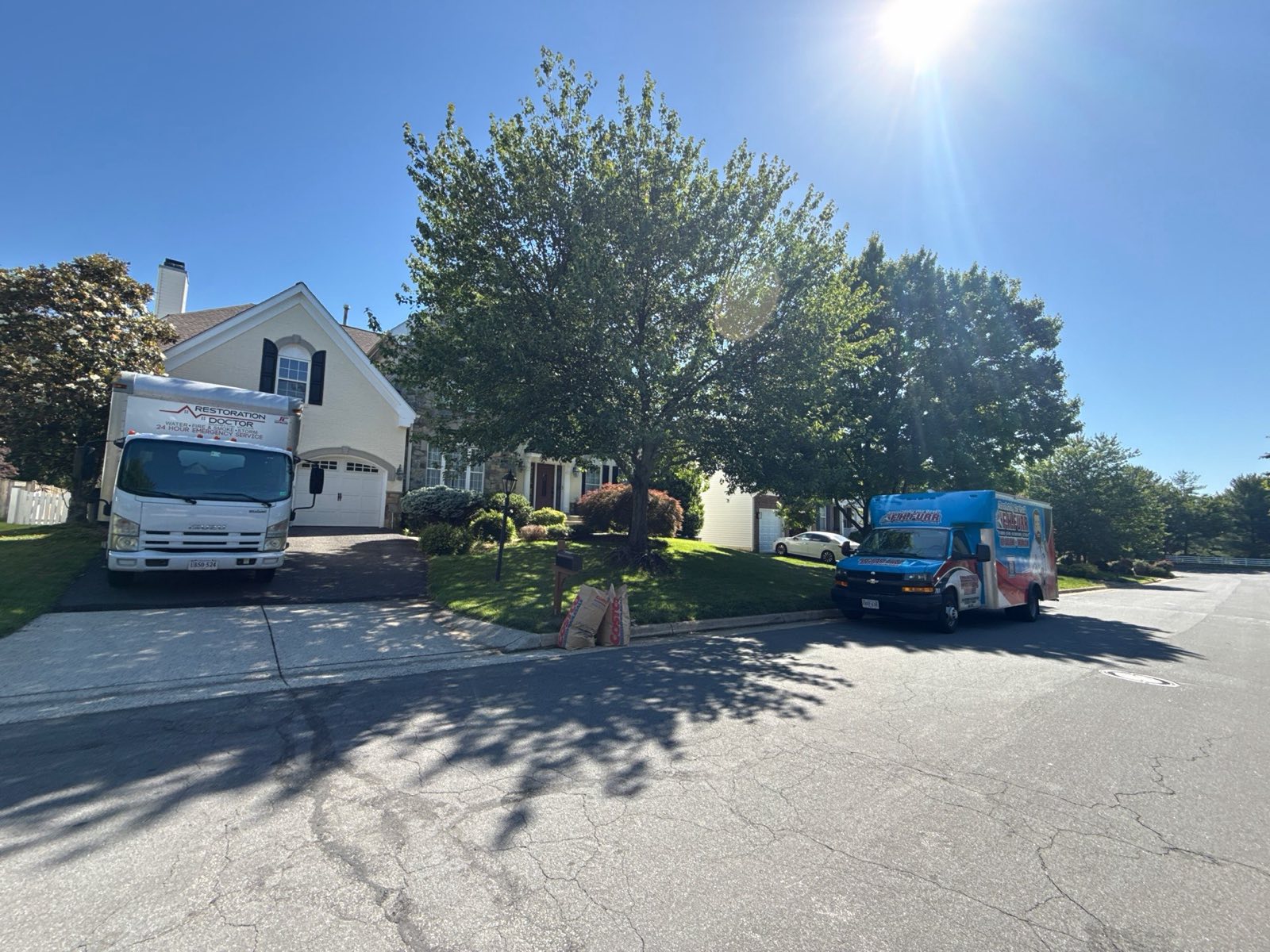
Water Damage Restoration in Park Slope, Brooklyn
Park Slope's brownstone rows are some of the most carefully kept 19th-century housing in America, and water is their oldest enemy. Restoration Doctor of NYC provides water damage restoration in Park Slope with a preservation-first mindset: dry the original plaster, woodwork, and floors in place wherever measurement supports it, remove only what genuinely cannot be saved, and leave every owner with documentation their insurer and their rebuild contractor can work from.
The losses here follow the architecture. Garden levels and cellars sit low against an aging combined sewer and flood during hard rain; the slope itself sends storm water downhill toward Fourth Avenue, where the lowest blocks have seen serious flash flooding; roofs, cornices, and parapets a hundred and forty years old leak from above; and the plumbing stacks threaded through these houses — many now divided into co-ops, condos, and rentals — fail inside walls shared by multiple households.
Whether you own a whole house on a named street, a duplex in a converted brownstone, or a unit in one of the larger co-op buildings along Prospect Park West, we respond around the clock, work to IICRC S500 standards, and keep boards, neighbors, and management in the loop. Emergencies: (646) 789-6264.
The buildings of Park Slope — and how they fail
Park Slope is defined by its rows: brownstone and brick townhouses from the 1880s and 1890s, built shoulder to shoulder with shared party walls, stoops over garden-level entrances, and cellars below. Original construction is wood joist framing, plaster on lath, and interiors rich with woodwork — parlor-floor pocket doors, plaster cornices and ceiling medallions, mahogany and oak details that no modern replacement matches. When water reaches these materials, the difference between a restoration-minded dry-out and a demolition-minded one is enormous.
Most of these houses no longer hold one family. Conversions over the decades have produced garden-and-parlor duplexes, floor-through condos and co-ops, and owner-occupied buildings with rental units — which means a single plumbing failure now crosses legal boundaries between households, and losses involve neighbors, small co-op boards, and sometimes managing agents. Along Prospect Park West and the wider avenues, larger pre-war apartment buildings and co-ops add classic stacked-riser exposure to the neighborhood mix.
The vertical geography matters as much as the age. Garden levels and cellars — many finished as family rooms, offices, or rental apartments — sit at or below the sewer line, and the neighborhood literally slopes from Prospect Park down toward the Gowanus, concentrating storm water on the lower avenues. Top floors carry the roof: aging flat roofs, cornices, and skylights that admit water after every hard storm season.
How water losses unfold in Park Slope
Garden Levels and Cellars: The Low Points
The most common serious loss in Park Slope is water in the garden level or cellar. Heavy rain surcharges the combined sewer and pushes water back through floor drains, low toilets, and laundry connections; groundwater and surface runoff find their way through old foundation walls and under stoops; and the finished lower levels that make these houses work for modern families take the hit.
Backup water is Category 3 — contaminated — whatever it looks like, and finished lower levels demand a full protocol: containment, extraction, removal of carpet, pad, and saturated drywall or paneling that cannot be sanitized, cleaning, antimicrobial treatment, and verified structural drying per IICRC S500. In a garden-level rental apartment, this is a habitability issue as much as a property one, and we treat it with that urgency.
Repeat flooding deserves honesty: drying the space again without addressing the entry path guarantees another loss. We document how and where water entered so the owner's plumber or waterproofing contractor — always the owner's choice — knows exactly what to fix, whether that conversation ends in a check valve, drain work, or exterior waterproofing.
Saving Plaster, Woodwork, and Original Floors
A brownstone's value lives in its fabric, and our drying strategy starts from that premise. Plaster on lath, given a fast response, can very often be dried in place with controlled dehumidification and cavity drying — preserving cornices, medallions, and flat work that would cost dearly to reproduce. We test with meters and thermal imaging before anyone opens anything, and when openings are necessary we cut them small, square, and where they matter.
Original floors respond to speed. Cupped heart-pine and oak can frequently be drawn flat with panel drying systems if drying starts before permanent set; pocket doors and paneling are dried in place with monitored airflow rather than removed. Wet antique material is not automatically lost material — but it is lost if it sits wet for a week.
When damage crosses between units in a converted brownstone — an upstairs leak into the duplex below, a shared-wall pipe failure — we document each unit separately. Who bears which cost depends on the co-op or condo documents and the insurance involved, and HO-6 versus building-policy questions vary house by house; our job is clean facts, fast drying, and scope each party can verify.
Roofs, Party Walls, and Small Co-op Buildings
From above, Park Slope houses leak at the roof line: aged flat roofs, deteriorated cornices, parapet cracks, and skylight curbs that let storm water into top-floor ceilings and down through the house along party walls. Slow envelope leaks masquerade as plumbing problems and vice versa; we trace the moisture pattern with imaging and metering so the diagnosis — and the owner's next call, roofer or plumber — is grounded in evidence.
In the larger co-op buildings along Prospect Park West and Eighth Avenue, losses look more like Manhattan: stacked risers, radiator and steam failures, board processes, alteration agreements for the rebuild phase, and managing agents who need COIs before work starts. We run that playbook routinely, including freight elevator scheduling and unit-by-unit documentation for each affected shareholder.
Cost ranges in Park Slope track scope, not address: a contained one-room drying project may run in the low thousands, while a flooded finished cellar or a multi-floor leak through original plaster can reach five figures. Every estimate we write is built from documented moisture readings, and we walk owners through it line by line before work proceeds.
Park Slope neighborhoods we serve
Real communities — and the water losses we most often see in each.
Blocks nearest Flatbush and the park entrance — early rows and larger buildings where conversions put multiple households on one plumbing stack.
The landmark heart of the district, where preserving original plaster and woodwork drives every drying decision.
Frame and brick rows toward the Greenwood side with finished cellars, rental units, and steady storm-backup exposure.
Grand co-op apartment buildings facing the park with stacked risers, boards, and Manhattan-style building logistics.
The low edge of the Slope — newer condo mid-rises and older stock where downhill storm water and flash flooding concentrate.
Mixed-use rows with apartments above shops, where one leak affects both a business and the homes upstairs.
Full restoration services in Park Slope
One operation covers every category — from emergency mitigation to full reconstruction.
Water Damage Restoration
Restoration Doctor of NYC provides emergency water extraction, moisture mapping, and structural drying for apartments, co-ops, condos, brownstones, and commercial spaces throughout the five boroughs, working within building rules, insurance documentation requirements, and the realities of vertical living.
Sewage Cleanup
Restoration Doctor of NYC performs emergency sewage extraction, contaminated-material removal, cleaning, and disinfection for sewer backups and drain failures in brownstone cellars, apartment buildings, and commercial spaces throughout New York City.
Mold Remediation
Restoration Doctor of NYC provides containment-based mold remediation for apartments, brownstones, and commercial spaces across the five boroughs, performed in a manner consistent with the IICRC S520 standard and with awareness of New York State and City mold regulations.
Fire Damage Restoration
Restoration Doctor of NYC handles the full arc of fire recovery in New York City properties — emergency board-up and securing, smoke and soot cleaning, odor treatment, water mitigation from firefighting, and structural rebuild — with the building coordination that multi-unit fires demand.
Contents Restoration
Restoration Doctor of NYC provides full contents services for New York City losses: detailed photo inventory, professional pack-out through the realities of NYC building access, specialized cleaning and deodorization, climate-controlled storage outside Manhattan, and coordinated return after rebuild.
Reconstruction
Restoration Doctor of NYC rebuilds water-, fire-, and mold-damaged spaces across the five boroughs, managing the approvals, access logistics, and trade coordination that New York buildings require, and restoring everything from patched drywall to full gut renovations of loss-affected units.
Verify us before you call
Our customer feedback lives on the network's verified reviews hub and on our New York City Google Business Profile — source-linked aggregates, never numbers typed onto a marketing page. Check both, then call.
Frequently asked
Active water, mold, fire, or sewage event?
Connect directly with the Restoration Doctor team for your region. Crews are on standby 24/7 with documented response protocols.
Financing available through Stripe, subject to lender approval.