
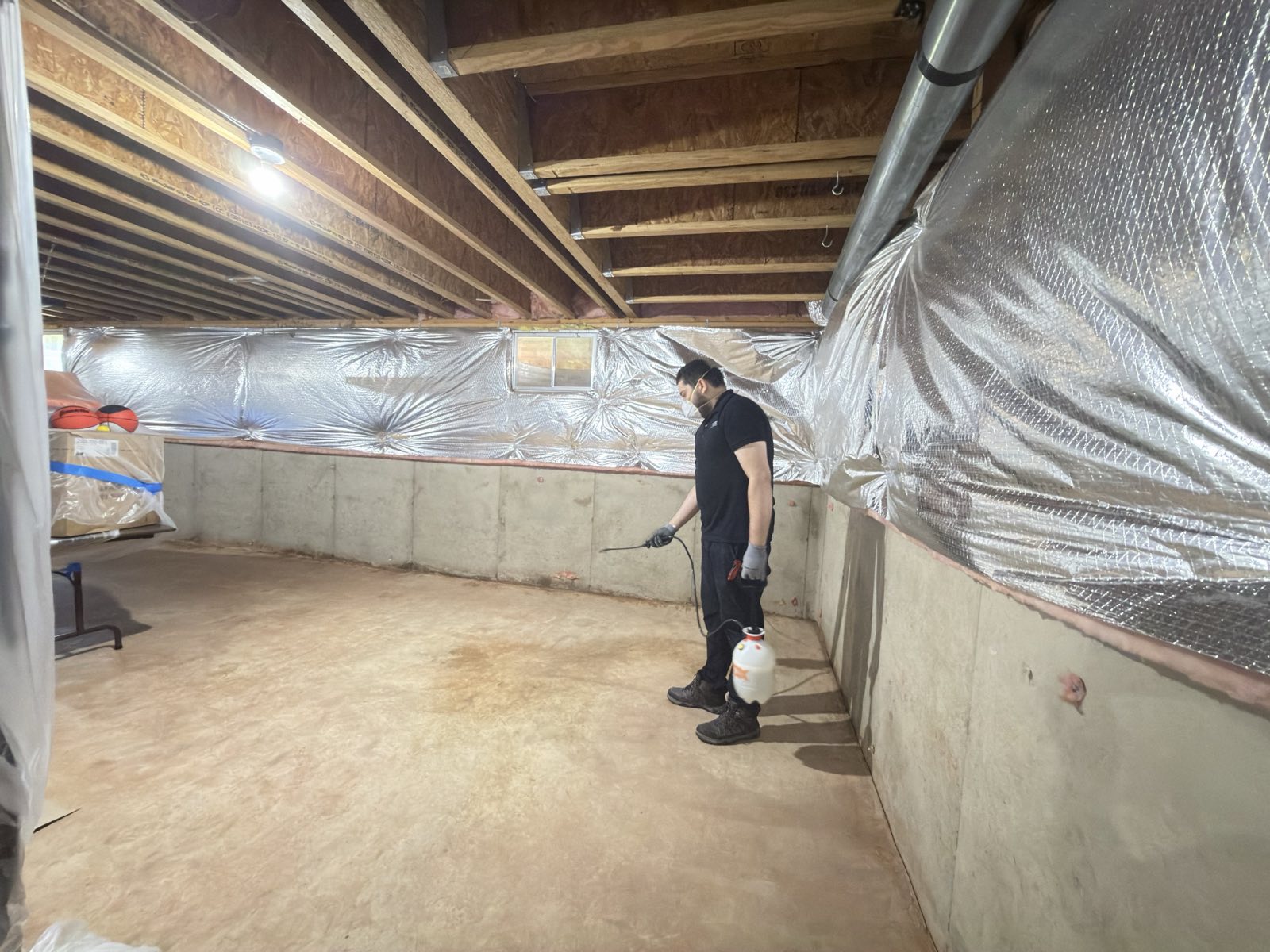
Mold Remediation for New York City Homes and Buildings
Mold in a New York apartment is rarely just a surface stain — it is a moisture problem with a history, often hidden behind plaster, under floors, or inside a wall shared with a neighbor. Restoration Doctor of NYC remediates the growth, addresses the conditions that fed it, and documents the work properly.
How Mold Takes Hold in New York Housing
Every mold problem is a moisture problem first. In New York's housing stock, the moisture sources are predictable: slow leaks from an upstairs unit that were painted over rather than dried, condensation on uninsulated exterior walls in pre-war buildings, chronic humidity in below-grade cellars, steam-line leaks inside wall cavities, bathroom exhaust that vents nowhere useful, and window-corner condensation in winter. Because so many of these sources are hidden or shared with a neighboring unit, growth often develops for months before anyone sees it.
Pre-war construction adds a wrinkle. Plaster itself is not a friendly food source for mold, but the wood lath behind it, the paper-faced patches added over decades of repairs, and the layers of paint and wallpaper on top absolutely are. A wall that looks intact can conceal an active colony on the lath, announced only by a musty odor or by staining that keeps returning after repainting. In post-war buildings, paper-faced drywall is among the most mold-susceptible materials ever put in a wall, and a modest leak inside a chase can produce extensive hidden growth.
The renter and shareholder experience is often a slow escalation: a musty smell, a recurring stain, repainting, the stain returning, and finally an argument about who is responsible for opening the wall. When we are brought in, our first job is finding the moisture source and mapping the true extent of growth — including what is behind surfaces — because remediating visible mold while leaving the source and the hidden growth guarantees a repeat visit.
New York's Mold Rules — What Owners and Tenants Should Know
New York regulates mold work more formally than most of the country, and anyone hiring for mold remediation in the city should know two things. First, New York State Labor Law Article 32 establishes a licensing framework for mold assessment and remediation work above certain size thresholds, and it deliberately separates the roles: the company that assesses a mold condition and writes the remediation plan is generally required to be independent of the company that performs the remediation. That separation exists to protect consumers from contractors inflating scope, and it means larger projects properly involve two firms — an assessor and a remediator — plus post-remediation verification.
Second, New York City's Local Law 55 (the Asthma-Free Housing Act) places obligations on landlords of certain multiple dwellings to keep units free of indoor allergen hazards, including mold, to inspect for those hazards, and to correct them using safe work practices. For tenants, this means documented mold conditions are a housing-standards issue with a legal framework behind them, not merely a cosmetic complaint. For owners and managers, it means mold response in tenant-occupied buildings carries compliance obligations beyond simply cleaning what is visible.
We raise these rules because informed clients make better decisions, not to give legal advice — the applicability of any statute to your situation depends on the specifics, including project size, building type, and occupancy. When a project falls within the scope of these frameworks, we structure our involvement accordingly and work alongside independent assessors. Ask us about the regulatory posture of your specific project when you call, and we will walk through it candidly.
Containment First, Removal Second, Verification Last
Disturbing mold without containment spreads spores through the very air you are trying to clean, and in an occupied apartment building the stakes are higher because hallway air, shared shafts, and neighboring units are all downstream of a careless job. Our remediation work follows the sequence reflected in the IICRC S520 standard, with which our practices are consistent: isolate the work area with physical containment and negative air pressure, protect occupants and unaffected spaces, then remove or clean affected materials under controlled conditions.
Inside containment, porous materials with significant growth — drywall, insulation, carpet — are removed, bagged, and sealed before leaving the work area. Semi-porous materials like framing lumber and wood lath are typically cleaned and treated in place using HEPA vacuuming and appropriate agitation methods. Non-porous surfaces are cleaned and HEPA-vacuumed. Air filtration devices with HEPA filtration run throughout the project, and containment stays up until the work area passes inspection.
The final and most skipped step is verification. On projects where an independent assessor is involved, the assessor performs post-remediation verification before containment comes down — confirming the work area is dry, free of visible growth and remediation dust, and ready for rebuild. We welcome that independent check; a remediation that cannot pass third-party verification was not a remediation.
Fixing the Moisture, Not Just the Mold
Remediation that ends with clean surfaces and an unfixed leak is a subscription, not a solution. Every project we take includes identifying the moisture source and either correcting it within our scope — drying a wet assembly, addressing a condensation-prone surface during rebuild — or clearly flagging it for the appropriate trade, such as a plumber for a supply-line leak or a roofer for a parapet failure. In co-ops and condos, the source is sometimes in another unit or in common elements, which makes management's involvement essential; we document what we find so the building can act on it.
Humidity is the quiet culprit in many recurring cases, especially in cellars and in apartments where bathroom and kitchen ventilation is inadequate. Where the pattern of growth points to ambient humidity rather than a discrete leak, we say so, and we discuss practical controls — dehumidification, ventilation improvements during rebuild — rather than letting you believe removal alone solved the problem.
Cost varies with the size of the affected area, the containment required, whether the project involves an independent assessor and verification, and how much rebuild follows the remediation. Small, contained closet or bathroom projects sit at the low end of the range; multi-room projects with hidden growth and full verification protocols run higher. Any number quoted before an inspection is a range, and we would rather inspect first and quote once.
Frequently asked
Active water, mold, fire, or sewage event?
Connect directly with the Restoration Doctor team for your region. Crews are on standby 24/7 with documented response protocols.
Financing available through Stripe, subject to lender approval.